

September 30, 2026
Avoid Tour Chaos: Director’s Playbook for Choir Performance Tours

The first move in choir performance tour planning is locking down your dates, your destination scope, and a hard count of committed singers before you touch a budget spreadsheet. Everything else, fundraising, venue booking, chaperone ratios, and paperwork, flows from that decision. Directors who start there typically move through the timeline, budgeting, logistics, and safety documentation stages in order, without doubling back to fix scope creep later.
TL;DR:
- Lock in your destination, travel window, and minimum headcount before handling budgeting or vendor inquiries to prevent scope creep.
- Begin collecting passports, consent, medical forms, and school approval early, especially for international trips, to avoid last-minute document issues.
- Allocate enough planning time—12 to 18 months for international tours—and build slack into deadlines to absorb delays or emergencies.
- Confirm vendor details, accommodations, and transportation policies well in advance, particularly airline instrument policies and group-rate quotes, to prevent unexpected expenses.
- Invest in local promotion, cultural research, and post-tour evaluations to maximize artistic impact, audience turnout, and future planning insights.
Table of Contents
- Your starter checklist for the first two weeks
- Building a 12 to 18 month planning timeline
- Setting a realistic budget and raising the difference
- Moving people, instruments, and luggage without the chaos
- Booking venues, tech riders, and rehearsal time
- Passports, visas, and safety planning that actually holds up
- Deciding between DIY planning and hiring a tour organizer
- Filling the house: marketing your tour performances
- Respecting local culture and etiquette on tour
- Closing the loop: post-tour evaluation
- Protecting morale: downtime and vocal rest on tour
- What years of choir tour logistics have taught us
- How Group Travel Network takes the logistics off your plate
- Where to check the official rules and dig deeper
- Sources
- FAQ
Your starter checklist for the first two weeks
Before you contact a single vendor, get your foundational pieces in place. This is the work that unlocks everything downstream, from fundraising to booking.
Immediate tasks:
- Confirm a tentative destination and travel window with school or organization leadership.
- Send a commitment form to families with a small deposit to gauge real participation.
- Set a firm minimum headcount below which the tour gets rescheduled or scaled down.
- Open a dedicated account or payment system for tour funds, separate from general choir accounts.
Documents to start collecting now:
- Copies of valid passports for any international leg, even a tentative one.
- Basic medical and allergy forms for every traveling member.
- Parental consent forms, since most travelers will be minors.
- Written approval from school administration or your organization’s board.
Set up your communication channel early, whether that is a group email list, a dedicated app, or a simple shared folder. Families respond better when they see one consistent source of updates instead of scattered texts and hallway conversations. A staged payment plan, collected in three or four installments rather than one lump sum, also reduces the number of families who drop out for financial reasons later in the process.
Building a 12 to 18 month planning timeline
A choir tour is not a single project, it is a sequence of smaller deadlines that compound. Treat the calendar as your primary planning tool from day one.
- 12 to 18 months out: Settle on the tour’s purpose, whether that is a competition, a cultural exchange, or a performance circuit, and get formal approval from your school or board. Draft a rough budget and begin outreach to fundraising partners.
- 9 to 12 months out: Send the first vendor inquiries for transportation, lodging, and venues. Lock a destination if it is still tentative, since flight and hotel rates only climb the longer you wait.
- 6 to 9 months out: Book charter transportation or flights, confirm accommodations, and purchase group travel insurance. This is also when repertoire selection for the tour should firm up so rehearsal planning can begin.
- 3 to 6 months out: Finalize your traveler roster, collect passports and consent forms, and confirm chaperone assignments and room lists.
- 1 to 3 months out: Confirm sound and lighting needs with each venue, distribute final itineraries to families, and collect any remaining balances.
- 1 to 2 weeks out: Reconfirm every bus, flight, and hotel reservation directly with the vendor. Print physical copies of rosters, medical forms, and emergency contacts for every chaperone.
- Day of departure: Do a final headcount against your roster, distribute emergency contact cards, and confirm each chaperone has a copy of the full itinerary and incident-reporting plan.
Smaller domestic tours can compress this into eight or nine months, but international trips benefit from the full runway, particularly for passport processing and visa research. Building slack into each phase, rather than treating deadlines as fixed points, gives you room to absorb the inevitable vendor delay or family emergency without the whole schedule collapsing.
Setting a realistic budget and raising the difference
A tour budget is really several smaller budgets stacked together: transportation, lodging, meals, venue fees, insurance, and a miscellaneous line for the things nobody predicts. Underestimating any one of these is the most common reason a per-person price balloons midway through planning.
- Transportation: Get quotes for both charter bus and flights before deciding, since the cheaper option depends heavily on distance and group size.
- Lodging: Price hotels per room, not per person, then divide by expected occupancy to get an accurate per-traveler figure.
- Meals: Budget a daily per-person allowance and decide upfront which meals are included versus on-your-own.
- Venue and tech fees: Ask each venue directly, since sound, lighting, and rehearsal space rentals vary widely and are easy to forget until the invoice arrives.
- Contingency: Add a buffer on top of your subtotal to cover currency shifts, cancellations, or last-minute additions.
Once you have a subtotal, divide by your confirmed traveler count to get a baseline per-person cost, then build in your contingency before presenting a number to families. Fundraising can offset a real portion of that figure: consider performance-based fundraisers like ticketed concerts, sponsorships from local businesses, or partnerships with booster organizations. Outside contributions from community groups should be tracked transparently and applied evenly, so no single family’s fundraising effort quietly subsidizes another’s balance without everyone understanding the policy.
Pro Tip: Publish the full budget breakdown to families before collecting the first payment. Transparency around where the money goes cuts down on billing disputes later in the process.
Moving people, instruments, and luggage without the chaos
Logistics is where most of the actual stress lives, and where a little advance planning pays off the most.
Transportation choice. Charter buses make sense for regional tours under roughly six to eight hours of drive time, since they eliminate airport logistics and let the group travel together. Flying becomes the better option once distance stretches beyond that, but group-rate airline bookings need to be locked early, since blocked seating for large ensembles gets harder to secure as departure approaches.
Instrument handling. If your choir tours with accompanying instrumentalists or hand percussion, plan for screening delays. TSA guidance on musical instrument screening explains that instruments go through security inspection and that travelers should tell officers in advance about anything needing special handling. Airlines also set their own size and seat rules for carry-on instruments, so confirm those policies with the specific carrier well before the trip, not the week of. Instrument logistics are often the single biggest surprise expense on a tour, and directors who check airline policy early avoid last-minute shipping fees for oversized cases.
Hotel selection checklist:
- Confirm the property can block rooms together on the same floor or wing for supervision.
- Ask whether a meeting room or common area is available for morning warm-ups.
- Check security policies, including whether room keys require ID verification at the front desk.
- Clarify what meal plan, if any, is included and whether a group breakfast can be arranged.
Chaperones and rooming. A workable starting ratio is one adult chaperone for every several students, adjusted upward for younger groups or overnight-heavy itineraries. Assign a chaperone to manage medication collection and distribution for the whole trip rather than leaving it to individual families, and set a clear rooming policy in writing before departure so there is no ambiguity about who rooms with whom.
Meals. Build a simple dietary plan in advance: collect allergy and dietary restriction information during registration, then share a summary with hotels and restaurants ahead of arrival so accommodations are not improvised at the table.
Pro Tip: Ask your bus or airline vendor for a written group-rate quote in writing, not just a verbal estimate. Verbal quotes tend to shift once the booking is actually processed.
For a broader logistics reference geared specifically to school ensembles, our choir tour planning playbook walks through additional scheduling detail.
Booking venues, tech riders, and rehearsal time
Securing the right performance slots is where the tour actually pays off artistically, and it deserves the same rigor as transportation booking.
Venue evaluation checklist:
- Confirm seating capacity matches your expected audience size, since a half-empty large hall reads worse than a full small one.
- Ask about the room’s acoustic character, particularly whether it was built for amplified sound, choral music, or both.
- Check whether the venue carries its own liability insurance or requires proof of yours.
- Ask what local audience the venue typically draws, since some rooms are tourist-facing and others serve a local community base.
A basic tech rider should specify your microphone needs (if any), risers or staging requirements, house sound system capabilities, and a rough sound check window. Ask the venue’s local AV staff directly whether they have choral risers on hand, what their changeover time looks like between groups, and whether a sound technician will be present during your performance slot, not just for setup.
Schedule warm-ups and rehearsal space as close to the performance venue or hotel as logistics allow. A rehearsal room fifteen minutes away by bus eats into a group’s energy before a concert far more than one down the hall. Where possible, build a short vocal warm-up window into the itinerary rather than assuming it will happen informally on the bus.
Local outreach can meaningfully affect turnout. Reach out to community choirs, local schools, and churches in the destination area, since cross-promotion with a local group often draws its own audience to your performance. A short co-billed concert with a local ensemble can turn a half-attended room into a full one.
Passports, visas, and safety planning that actually holds up
Documentation and safety planning are not separate tasks from the tour itself, they are the framework everything else sits inside.
Start with passports. The State Department’s international travel checklist recommends checking every traveler’s passport validity early and confirming destination-specific visa and entry requirements, since many destinations require at least six months of validity beyond your travel dates. Build passport renewal time into your 12 to 18 month timeline rather than assuming everyone already has a current one.
For minors traveling internationally, the State Department’s guidance on minors notes that some destinations require proof of relationship to accompanying adults or a notarized permission letter, and recommends carrying birth certificates in addition to checking destination-specific rules. School or district approval forms should be collected alongside these documents, not treated as a separate process.
Documentation checklist:
- Passport copies with confirmed validity for every international traveler.
- Notarized parental consent or travel letters where the destination requires them.
- Birth certificates carried alongside passports for minors.
- School or district-level written approval for the trip.
Insurance and emergency planning. Group travel insurance should cover trip cancellation, medical emergencies, and evacuation at minimum, and families should understand what is and is not covered before they pay their deposit. Our page on performance travel insurance breaks down the coverage types worth comparing.
Emergency protocols follow the same design of the whole trip. According to NAFSA’s Responsible Education Abroad best practices, responsible program design should build in emergency communication protocols, incident reporting procedures, and cancellation or evacuation policies as core planning elements, not afterthoughts. NAFSA’s framework treats safety planning as integral to program design rather than an add-on, which is a useful reframe for directors trying to get administrative buy-in for the time this planning takes.
Deciding between DIY planning and hiring a tour organizer
The honest answer depends on your group’s size, your staff bandwidth, and whether this is a domestic or international trip.
- Time cost: DIY planning for a mid-size choir tour can consume dozens of hours across a school year, spread across vendor calls, contract review, and family communication. A professional organizer absorbs most of that work in exchange for a fee built into the package.
- Risk and expertise: First-time international trips carry more moving parts, visas, currency, local vendor vetting, than most school staff plan more than once. An experienced organizer has already solved these problems for other groups.
- Control: DIY planning keeps every decision in your hands, from bus company to hotel breakfast. Hiring an organizer trades some of that control for reduced workload.
When vetting a professional organizer, ask directly about on-site support during the trip, prior experience with student and performance groups specifically, what insurance they carry, and their cancellation policy in writing. If this is your first international tour, your group is large, or your staff has no extra bandwidth this year, those are strong signals that hiring outside help is the more defensible choice.
Pro Tip: Ask any organizer you are considering for two references from school or choir programs of a similar size to yours, then actually call them.
For a closer look at vetting criteria, see our guide to choosing a student tour operator.
Filling the house: marketing your tour performances
A well-rehearsed set means little to an empty room, so publicity deserves its own line item in your planning, not an afterthought two days before the concert.
Start local in each tour city. Reach out to community calendars, local newspapers, and regional radio stations at least a few weeks ahead, since many will run free listings for nonprofit and school performances. Partner with local schools, churches, or community choirs to cross-promote, since their existing mailing lists reach an audience you do not have access to otherwise.
Social media works best when it features the specific stop, not a generic tour announcement. A short video of the choir rehearsing, tagged with the venue and date, tends to outperform a static flyer. Ask the host venue whether they will promote the show through their own channels, since many performance spaces have an existing subscriber base built for exactly this purpose.
Printed materials still matter for community venues: postcards or flyers left at local coffee shops, libraries, and community centers reach an older audience that social media misses. Whatever channel you use, repeat the core details, date, time, venue, and ticket information if applicable, consistently across every platform so there is no confusion at the door.
Respecting local culture and etiquette on tour
Performing outside your home community, whether across the country or across a border, means adjusting to expectations you may not share.
Research the destination’s general performance etiquette before you arrive. Some communities expect formal attire and reserved audience behavior, while others welcome a more participatory or informal concert atmosphere. If you are performing in a house of worship, ask in advance about dress codes, appropriate repertoire content, and any restrictions on applause or recording.
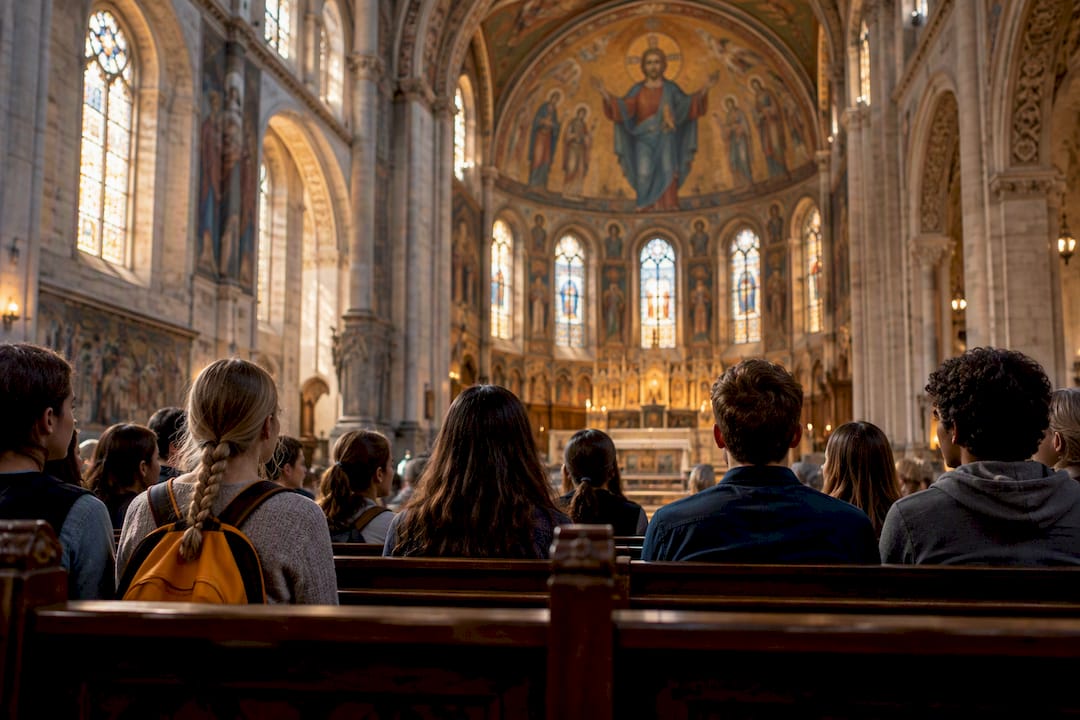
When touring internationally, a small amount of language preparation goes a long way. Teaching the choir a simple greeting or a short piece in the local language, even imperfectly delivered, tends to land well with audiences and shows genuine effort rather than a passing-through attitude.
Be mindful of how your group is perceived as visitors, not just performers. Simple choices, like asking before photographing local residents or checking whether a venue has specific customs around applause and audience interaction, prevent avoidable friction. If your tour includes an international leg, staying connected matters too. Reliable data access lets chaperones handle logistics and keeps families back home updated in real time; resources like SabraConnect’s guide to staying connected abroad are worth reviewing if connectivity in your destination is uncertain.
Closing the loop: post-tour evaluation
The tour is not finished when the bus pulls back into the parking lot. A short evaluation process turns one trip into better planning for the next one.
Send a brief survey to chaperones, students, and parents within a week or two of returning, while memories are still fresh. Ask specific questions: was the pacing reasonable, did the hotel meet expectations, was communication before departure clear enough, did the performance venues meet expectations acoustically and logistically.
Hold a short debrief with your chaperone team separately from the family survey. Chaperones often notice operational friction, rooming issues, meal timing, bus schedule slippage, that families never see but that matter enormously for the next trip’s planning. NAFSA’s best-practice framework specifically recommends scheduled post-program reviews as part of responsible program design, not just a courtesy gesture.
Keep a simple written record of what worked and what did not, tied to specific vendors and venues by name. That record becomes the single most useful document when you start planning next year’s tour, since it replaces guesswork with an actual account of what your particular group needed.
Protecting morale: downtime and vocal rest on tour
A touring choir that sings every waking hour burns out fast, vocally and emotionally. Recovery time needs to be built into the itinerary with the same intention as rehearsal time.
Schedule genuine downtime, not just travel gaps, into each day: an afternoon at a park, free time at a hotel pool, or an hour with no scheduled activity at all. These stretches let students recover physically and give directors a buffer if the day’s schedule runs long elsewhere.

Vocal rest matters as much as physical rest. Avoid stacking two demanding performances back to back without a lighter day between them, and build in quiet time before evening concerts rather than scheduling activity right up to call time. Simple habits, like reminding students to hydrate consistently and avoid shouting over loud environments like theme parks or crowded restaurants, protect voices without requiring any schedule changes at all.
A little recreation also does more for the group’s sound than an extra rehearsal block. A relaxed, well-rested choir generally performs with more warmth and consistency than one that has been drilled without a break, and morale on a multi-day tour tends to make or break how the group remembers the whole experience.
What years of choir tour logistics have taught us
Instrument transport is where plans most often go sideways. On one tour, an accompanying instrumentalist’s case did not meet a connecting flight’s size limit, discovered at the gate rather than during booking, which meant a scramble to find local storage for the remainder of the trip. Checking airline instrument policy during the booking phase, not the week before departure, would have prevented it entirely.
Rosters shift more than directors expect, sometimes within days of departure due to illness or family emergencies. Building a small buffer into your headcount and payment terms, rather than locking everything to an exact number, absorbs those last-minute changes without a scramble over refunds or reissued documents.
The workload eases considerably when a dedicated trip coordinator handles vendor confirmations, freeing directors to focus on rehearsal and performance quality instead of chasing bus companies. That division of labor, informed by years coordinating performance tours through Group Travel Network, is often the difference between a director who enjoys the trip and one who spends it on the phone.
— Donovan
How Group Travel Network takes the logistics off your plate
Planning a multi-city choir tour while still teaching a full course load is a lot to carry alone. A specialized performance tours service is built specifically for that gap: a dedicated trip coordinator handles vendor confirmations and scheduling changes while you focus on rehearsal and repertoire.

Services built for choir directors often include custom itineraries matched to the group’s size and performance goals, a single trip coordinator as a point of contact throughout planning, online registration for families, flexible payment plans, and travel protection options covering cancellation and medical needs.
- Custom itineraries built around your performance dates and destination goals.
- A dedicated trip coordinator managing vendor communication from booking through departure.
- Online registration and flexible payment plans for participating families.
- Travel protection options covering cancellation and medical contingencies.
When reaching out, having target dates, approximate headcount, and destination preferences ready helps coordinators put together a realistic first-pass itinerary. Visit the Performance Tours page to start a conversation about your group’s next trip.
Where to check the official rules and dig deeper
These are the primary references worth bookmarking as you plan, along with a few internal resources built specifically for school and choir groups.
- State Department international travel checklist for passport, visa, and entry-requirement guidance.
- State Department guidance on minors traveling internationally for consent and documentation rules.
- TSA musical instrument screening guidance for security procedures.
- NAFSA’s Responsible Education Abroad best practices for safety and program design.
- Our own guides on minors’ travel documents and performance travel insurance.
Sources
- U.S. Department of State: International travel checklist
- U.S. Department of State: Traveling with minors
- TSA: What steps are taken to screen musical instruments?
- NAFSA: Responsible Education Abroad—Best practices for health, safety, and security (Feb 2021)
FAQ
How far in advance should you start planning a choir tour?
Most school and adult choir tours benefit from a 12 to 18 month runway, especially for international trips that require passport processing and visa research. Smaller domestic tours can work on a compressed 8 to 9 month timeline, but venue and transportation availability tightens the longer you wait to book.
What documents do minors need for international choir tours?
Minors generally need a valid passport, and some destinations require a notarized parental consent letter or proof of relationship to accompanying adults, according to State Department guidance on minors. Carrying a birth certificate alongside the passport and checking destination-specific rules early avoids last-minute document scrambles.
What is the hardest part of a piece to sing in a choir?
Difficulty varies by piece and voice part, but sustained high passages, complex rhythmic entrances, and sections requiring precise tuning against other voice parts are commonly the most demanding for choir members. Directors typically address these through targeted sectional rehearsals rather than full-group run-throughs.
What are some good icebreakers for a choir meeting?
Simple options include a rhythm-clapping circle where each person adds a beat, a quick vocal warm-up game that doubles as a name exercise, or a “two truths and a song” round tied to favorite repertoire. These work well before rehearsal because they warm up focus and voice at the same time.
What are some project ideas for a choir group?
Choirs often take on a themed concert built around a specific composer or region, a community outreach performance at a local care facility, or a collaborative concert with another school or community ensemble. A performance tour itself, built around a competition or cultural exchange, is another common project that gives the group a concrete goal to rehearse toward.
Recommended

Relax with our Student Travel Expertise .
We deliver stress-free student trips backed by an exceptional array of services you won’t find anywhere else:
- Stress-free, creative planning of customized itineraries
- Dedicated GTN Service host on every trip
- Extensive travel protection plan options
- Online, individual registration system
- Flexible payment plans and online payment options
- Bulk buyer discounts for great trips that cost less
Inclusion into #MyGTNFamily for life! (you don’t even have to remember our birthday!)
Spain
There is no place like Spain to offer a student performance opportunity or cultural student trip.
Myrtle Beach
All students love the beach! Especially a beach known for its 60 miles of pristine coastline.
Boston
Have your students experience colonial charm in the city that is considered the hub of New England.
London
Provide your student group with the “Royal” treatment! One of the world’s most recognized cities.
See What People Are Saying
“This was my first time using a company to plan our band trip. It was so easy working with Justin and Group Travel Network. We had to make several changes along the way, but they were accommodating changes and worked everything out for us. I would highly recommend using Group Travel Network.”
“What wonderful trip we had to NYC! Our group of 51 never missed a beat because of Group Travel Network and our wonderful guide, Tim. It was truly a theatre trip to remember! If you are looking for a travel company who really cares about the details, Group Travel Network is for you!”
“It has been my privilege to use Group Travel Network as the exclusive travel coordinator for my band for over 10 years. I can say, without doubt or hesitation, that GTN is, by far, the best travel company for student groups currently in existence. I have often said that I wouldn’t take my band across the street without GTN and that’s not far from the truth!”